
Keeping children in the classroom in Việt Nam's highlands area.
In Việt Nam's northern highlands, getting children into school is only half the battle. Teachers in Lùng Cải are taking on a far bigger role, keeping them there.
Story by Bảo Long
In the highlands of the northern province of Lào Cai, school is not always the first option for every child.
For many years, teachers at Lùng Cải Commune had been familiar with the doorsteps of just about every household.
"Most parents work primarily as subsistence farmers, and their economic conditions remain limited," said Sền Đức Hạnh, vice principal of the Lùng Cải Primary and Secondary Boarding School for Ethnic Minorities.
Beyond the classroom, teacher Lâm Thị Hiên often takes time to talk with her students, seeking to better understand and gently nurture their emotional wellbeing.
"Some do not yet fully grasp the importance of education and still prefer their children to stay home and help with family chores."
It is only within the past two years, bolstered by new boarding facilities and supportive policies, that attendance has improved significantly.
But beyond just getting a child into the classroom, keeping them there until graduation is an even bigger problem. Teachers here must wear many hats to ensure education reaches every child.
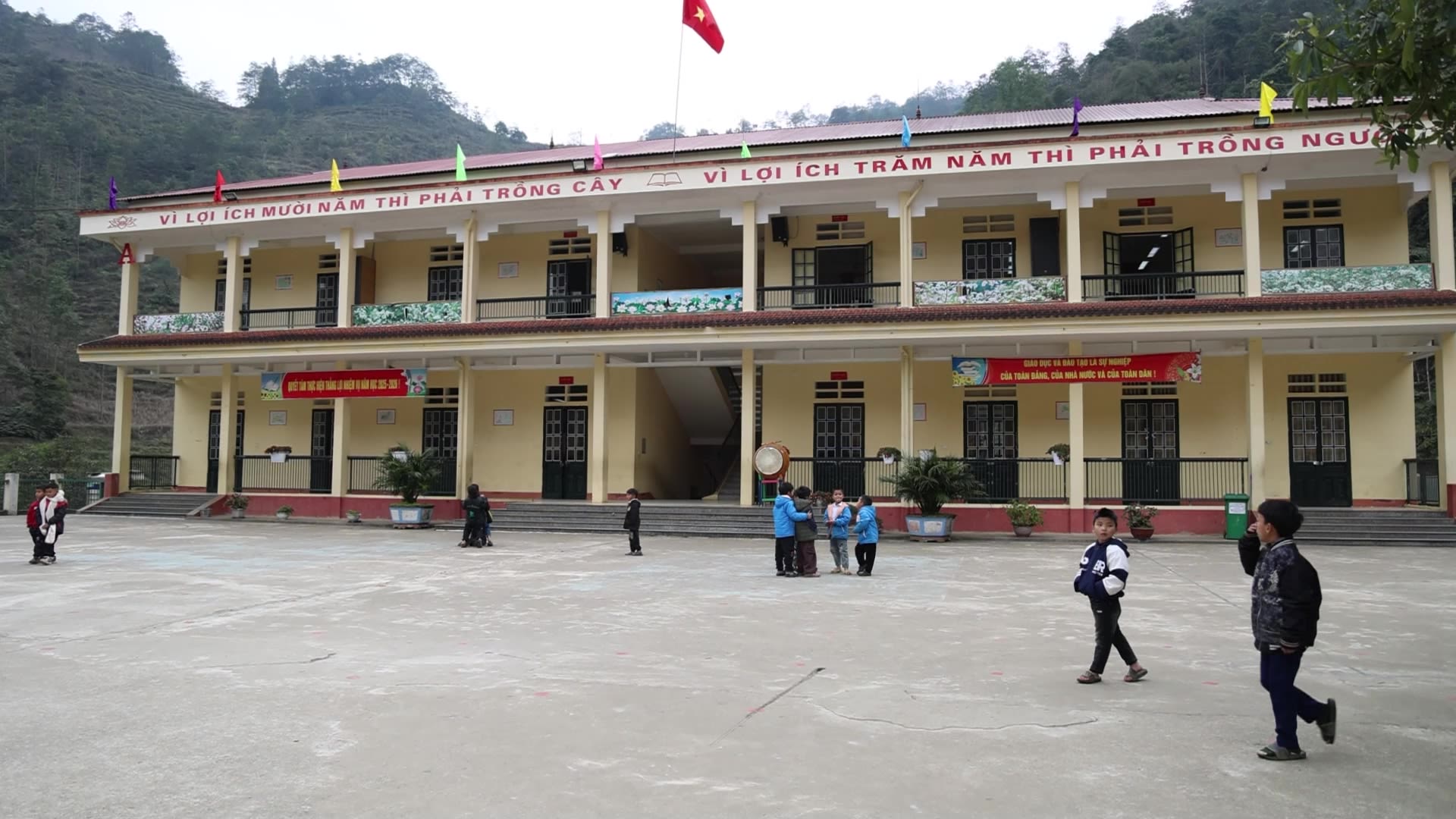
"Lùng Cải Boarding School for Ethnic Minorities, covering both primary and lower secondary levels, has a total of 25 classes, from grade 1 to grade 9. The primary school has 406 students, and the lower secondary school has 323 students. The total number of students in the school is 729, of which 596 students are boarding students." Vice Principal Sền Đức Hạnh
"Lùng Cải Boarding School for Ethnic Minorities, covering both primary and lower secondary levels, has a total of 25 classes, from grade 1 to grade 9. The primary school has 406 students, and the lower secondary school has 323 students. The total number of students in the school is 729, of which 596 students are boarding students." Vice Principal Sền Đức Hạnh
Boarding for the First Time
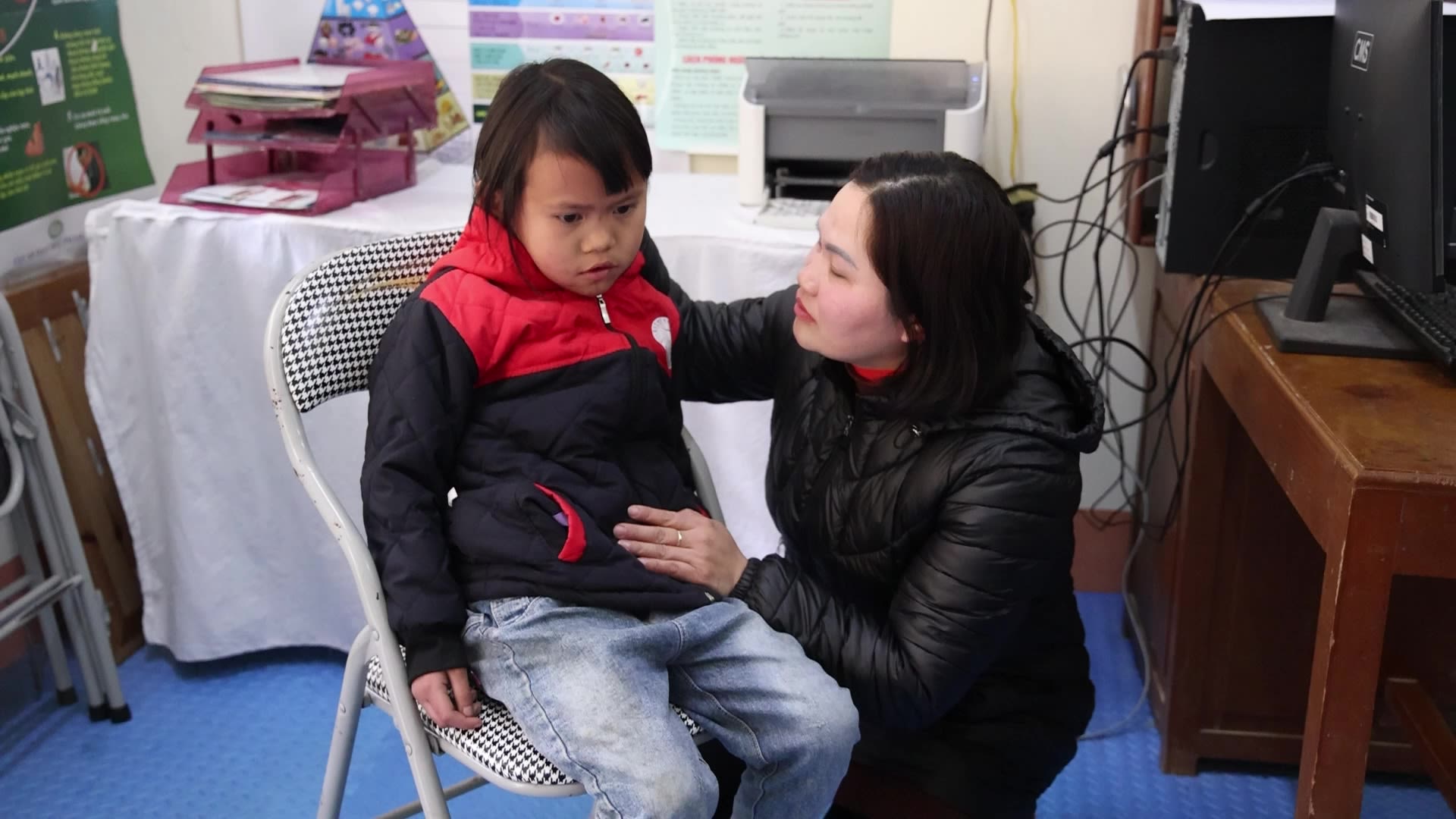
Teacher Đỗ Thị Lương Nhị looks after a student with a fever.
Teacher Đỗ Thị Lương Nhị looks after a student with a fever.
When a child stays at school, the learning does not begin with words.
For many students, this is their first time living far from home, making the first year the most challenging for teachers and pupils alike.
Teachers take turns staying behind during the week to care for the children, dedicating themselves to everything from cooking meals and monitoring health to simply comforting the younger ones.
"In the beginning, teachers have to guide them step by step through simple things like personal hygiene, which the students can't do on their own," said Đỗ Thị Lương Nhị, a first-grade teacher.
"Once they get used to it, they can take care of themselves."
Homesickness is also a constant battle.
"Whenever the children miss their parents, I buy them sweets to cheer them up," Nhị said.
"As we talk and they eat, they pour their hearts out to me: 'I miss my mom and dad so much.' I comfort them, saying: 'I’m here for you now.'"
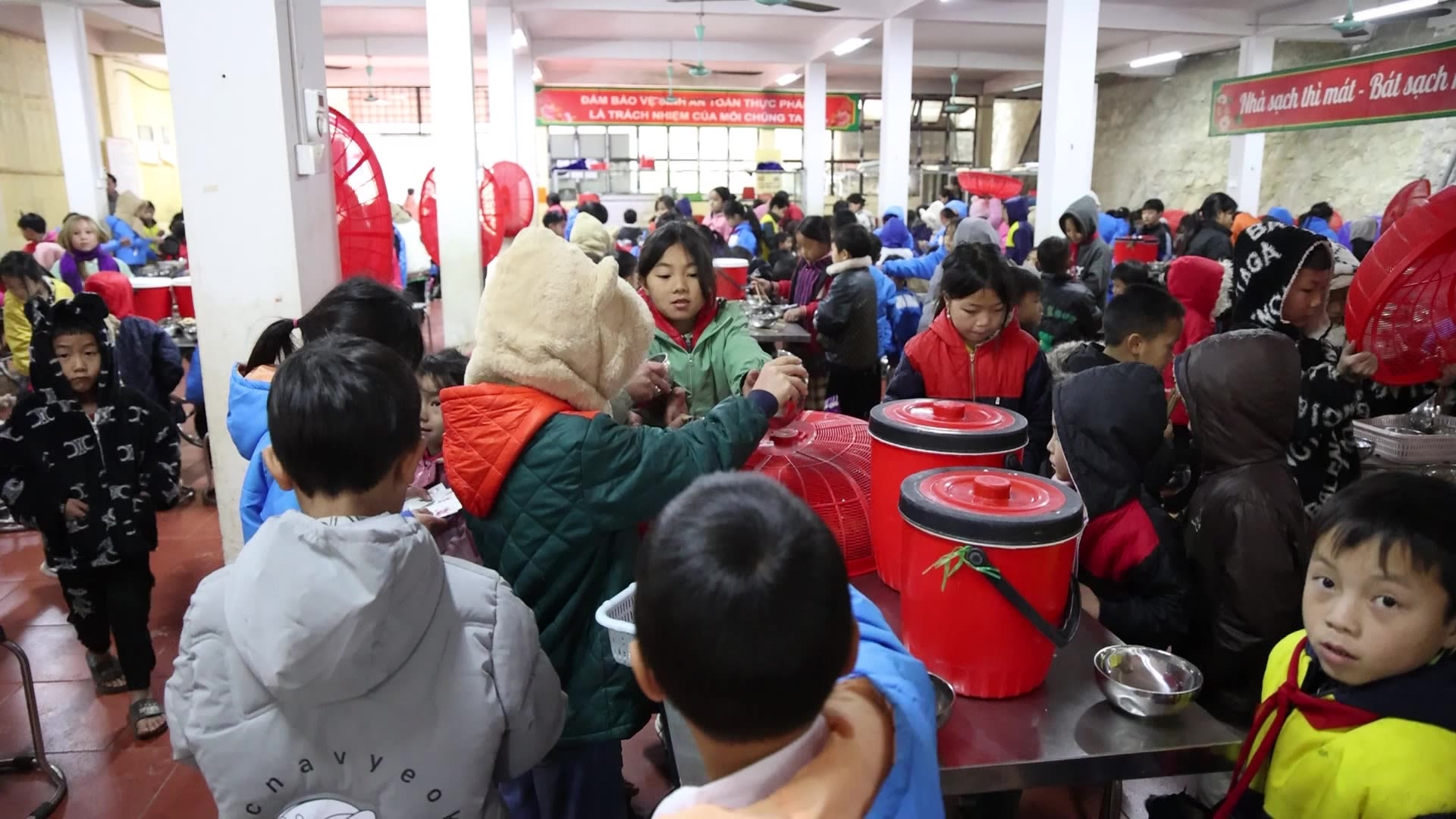
Beyond emotional support, physical nourishment is a daily priority. According to Vice Principal Hạnh, the school provides three cooked meals a day prepared by kitchen staff, with weekly menus that change seasonally to ensure a balanced diet.
"Mông students in these highland areas often lack essential nutrients," Hạnh said.
"The school has therefore mobilised funding to provide dietary supplements, such as calcium, and to buy extra milk for the children on Mondays and Fridays."
Once basic physical and emotional needs are met, the academic journey begins, though not without its own hurdles.
With the majority of students belonging to the Mông and other ethnic minority groups, the language barrier often leaves them timid and struggling to communicate. To help them feel less overwhelmed, the school organises eight-week Vietnamese language support classes before the start of the school year.
Consequently, the school administration has adjusted the standard curriculum. Teachers proactively space out their lessons and subjects, which would typically last for only two periods, stretching them to span three or four. This gives the students time to acclimate and master basic phonetics before the pace is gradually increased.
Thanks to government support, the semi-boarding model in Lùng Cải is proving highly effective. It not only improves educational quality and community awareness but also equips these children with essential life skills, independence, and discipline that they will carry with them long after they return home.
Teacher Đỗ Thị Lương Nhị looks after a student with a fever.
Teacher Đỗ Thị Lương Nhị looks after a student with a fever.
The Adolescent Battleground
As the children grow older and transition to secondary school, the challenges they face evolve from basic physical needs to complex social and psychological pressures.
"In grade nine, students start using social media more, and some begin relationships early as they navigate adolescence," explains Lâm Thị Hiên, a ninth-grade teacher.
"Many have parents who work far away, leaving them with little supervision or care at home."
In the past, the pull of the outside world often outweighed the anchor of the classroom, making dropping out a tragically easy choice. But today, these students have a fiercely dedicated support system that refuses to let them slip away.
Prevention starts with building trust. Hiên uses her morning review sessions as a safe space for open dialogue.
"I always make time to talk with my students to see if they're facing any issues or if they want to speak with me privately," Hiên said.
"They often open up, telling me if a classmate is having a problem, or sharing their own family struggles. They might say, 'Things are like this at home with my parents, and it makes me so sad.' No matter the issue, they feel comfortable sharing it."
This emotional safety net is crucial in a region where child marriage remains a looming threat. When a student is at risk of leaving, it is no longer just the teachers who step in – the students themselves have become part of the safety net.
Ninth-grade student Thào Thị Phương Dung said: "A few students were planning to drop out of school to get married.
"However, after teachers visited their homes to encourage them, and our classmates explained the harmful effects of child marriage, they decided to come back to school."
Beyond teaching in the classroom, teacher Lâm Thị Hiên often takes time to talk with her students, seeking to better understand and gently nurture their emotional well-being.
A Different Future
Teachers here are expected to be far more than educators. Going to school is no longer just about avoiding early marriage or farm labour, but it is becoming a deliberate stepping stone to a concrete career.
"In the past two years, we have seen more students go on to vocational schools and universities, especially the military and police academies," added Vice Principal Hạnh.
"It truly reflects the effort our teachers have put into guiding them."
For some students, the most profound inspiration comes directly from the people who fought to keep them in the classroom. When asked about her own future, Dung’s answer is a testament to the school's impact.
"I want to become a teacher," Dung said, "to teach students the way my teachers taught me."
 Built with Shorthand